Using Behavioural Intelligence to Recognise Behavioural Risk Earlier and Have Sharper Judgement.
Specialised advisory services and executive training for financial services professionals.
- Recognise communication blind spots
- Assess credibility with better questions
- Challenge inconsistencies before making critical decisions in high-stakes environments
Training you undertake may contribute towards your Continuing Professional Development (CPD), subject to relevance and your employer’s or professional body’s requirements.

Human risk, what are you overlooking in your people?
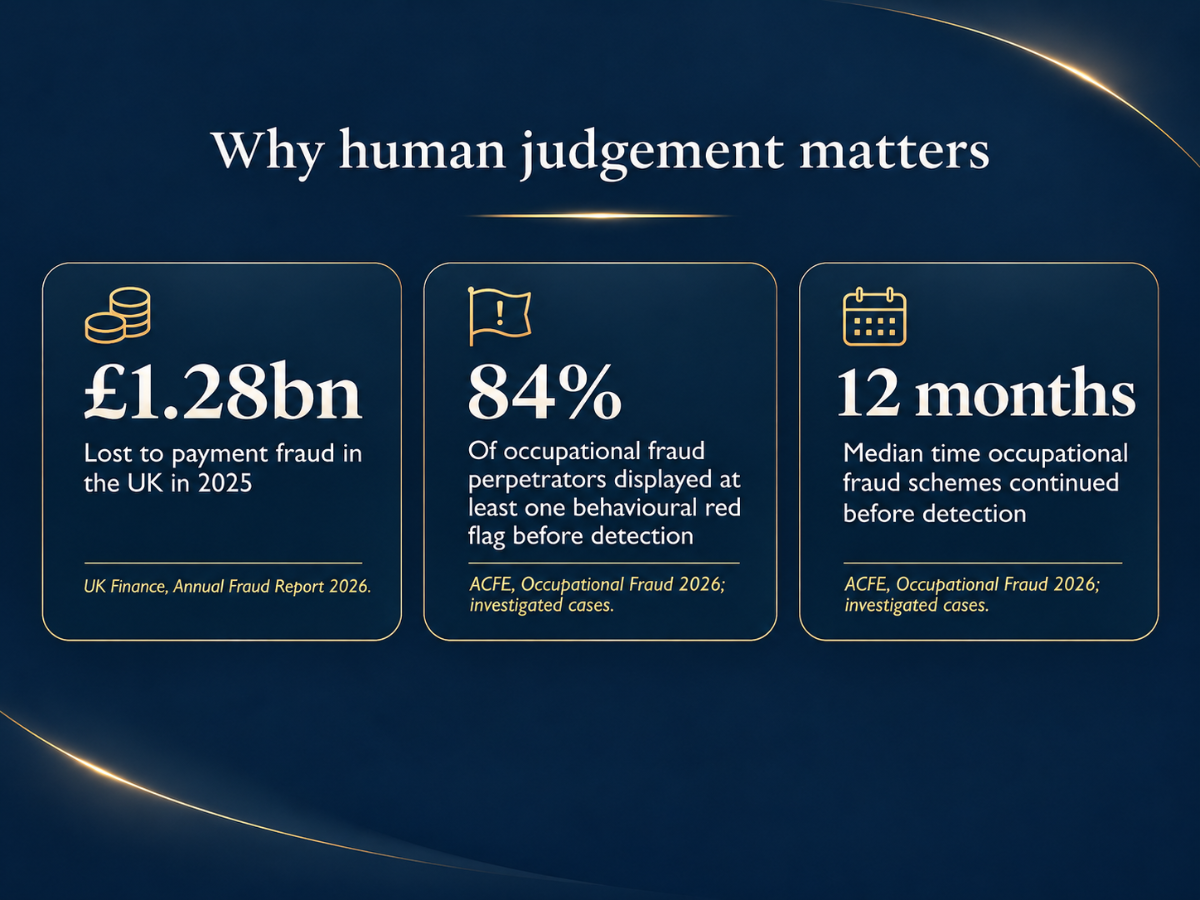
- In financial services markets across the globe, the consequences of misjudging people, overlooking behavioural warning signs or accepting information at face value can be significant, as these recent statistics illustrate.
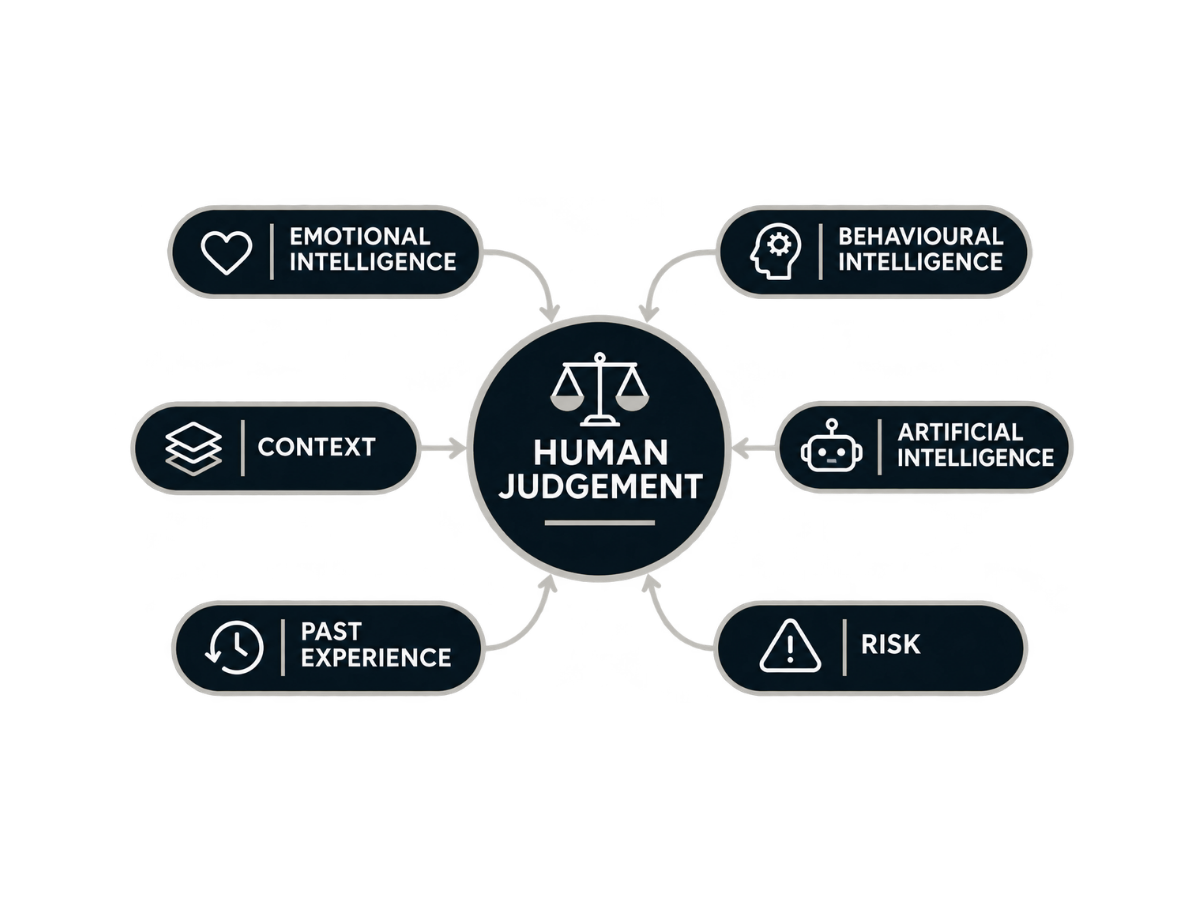
- In the banking and financial services sector in the UK and Australia, fraud detection is increasingly relying on a combination of artificial intelligence, behavioural analytics, biometric technology, transaction monitoring AND human investigation to recognise potential risks earlier.
- See beyond the obvious. Strengthen human judgement. Protect what matters.
In a world increasingly being shaped by AI, sound human judgement matters more than ever!
- As AI technology continues to change the business landscape and how we perform in our job roles, sound human judgement and critical thinking is becoming even more critical as we figure out the best way to keep up and work alongside AI.
- This year the UK’s Financial Conduct Authority (FCA) highlighted continuing gaps in financial services firms’ ability to recognise vulnerability, adapt communication and demonstrate the effectiveness of staff training. Importantly, the FCA recognises professional skills and behavioural understanding alongside technical financial knowledge.
- In 2026, Australia’s financial regulators, ASIC and APRA, warned that governance and human oversight are struggling to keep pace with AI adoption. Both emphasise the importance of human accountability, particularly in high-risk decisions, reinforcing the growing need for critical thinking, behavioural understanding and sound professional judgement.
- In November 2025, PwC announced its plans to equip over 85,000 of its workers in the US with critical thinking and judgement skills as AI transforms the way they work.

You can’t manage what you can’t recognise.
- Misunderstood emotions, missed behavioural cues and unchallenged assumptions can influence your decisions, business relationships and organisational outcomes, as I’m sure you would be aware.
- If you work in a high-stakes environment and hold responsibility for critical decisions, there are 10 essential behavioural intelligence skills you will need in order to be effective in recognising behavioural risk that others overlook when it comes to strengthening judgement, assessing truth and credibility, and asking the questions that matter.
- How well developed are your behavioural skills? Take a moment to put your own behavioural intelligence skills under the microscope! My complimentary 12 page checklist offers some practical insights so you can conduct your own mini skills audit. You might be surprised by what you discover — including a few blind spots you didn’t know you had!